Green or Brown Timber?
What the treatments actually do, why green timber looks green, and how both finishes age once they are up.
We stock both green and brown timber. They arrive looking completely different, cost different amounts, and end up in much the same place after a few years outdoors. Here is what is actually going on.
What is green timber?
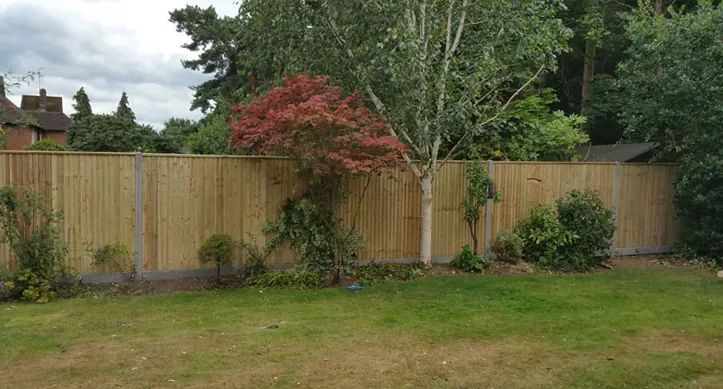
Green timber has a naturally pale, wooden colour, with a slight green tint or fleck running through it. That tint is not a decorative finish and it is not paint. It is a by-product of pressure treatment.
The chemicals used in pressure treatment are copper based. The copper reacts with the sap in the timber and with the air, then oxidises, and the result is green flecking on the surface. Because it depends on the sap in each individual batch, the shade varies from delivery to delivery. For that reason we recommend staining or painting green timber once it is installed if the exact colour matters to you.
What is brown timber?
Brown timber is a naturally darker wood before any treatment happens, and it can be treated two different ways.
Pressure treated brown
Goes through the same process as green, but with a dye added to the treatment to give the familiar brown appearance. That extra colour application is why brown timber generally costs more than green.
Dip treated brown
Dipped in a tank of preservative, then lifted out and left to dry. It does not penetrate the way pressure treatment does, so dip treated products have a shorter life. We only supply dip treated panels and trellis: products that should never be in contact with the ground, because ground contact is exactly where they degrade fastest. Dip treated wood tends to be a darker brown or a golden colour.
So which should you choose?
Honestly, it comes down to preference and budget. Green is cheaper and takes a stain well. Brown looks finished from day one. Neither is structurally superior: what matters far more is whether the timber is pressure treated and whether it is being used in ground contact.
How treated timber ages
This surprises people, so it is worth saying plainly. Over time the colour of fencing will change, first to a golden brown and then to a silvery grey. That happens to green and brown alike. It is not a fault and it is not a sign the treatment has failed.
If you want to control how it looks, both green and brown timber can be painted or stained, which also adds another layer of protection. If you intend to paint pressure treated wood a different colour, treat it first to seal it, and read the instructions on whatever product you use.
Caring for dip treated timber
Dip treated wood does not last as long as pressure treated wood, and it will want additional applications of preservative to get the longest life out of it. Plan on re-treating it, rather than assuming it is finished when it arrives.
The longer-life options
If the whole subject of re-treating fencing sounds like something you would rather avoid, there are two routes worth knowing about. Jacksons timber, whose Jakcured process is guaranteed against rot for 25 years, and DURAPOST galvanised steel posts, which sidestep the question entirely because there is no timber in the ground to rot. Both are covered on our fencing page.
Want to see the timber first?
We are happy to talk through the options at the quote stage rather than over the phone. Call 0118 989 0564 to arrange a visit.